We surveyed hundreds of businesses and consumers to find out exactly where RCS awareness and sentiment are right now. Then our expert analysts added their own insights.
When you unlock this report, you’ll be able to learn exactly where the RCS market is right now, and take your first steps toward adding RCS to your messaging strategy.
You’ll learn:
Why brands are flocking to learn about RCS
Our outlook for market adoption
How to assess which brands are right for early adoption
We recently surveyed 560 businesses and 1,000 consumers to find out exactly where RCS adoption is in the US market. And now we’re sharing our exclusive findings.
In this guide, we’re walking through:
The current state of RCS for Business in North America
A full case study of how Netflix can use the rich media features of RCS for better audience engagement
Our own expert predictions for the future of RCS for Business
A full checklist to help you identify which brands are best suited for early adoption
By the time you finish reading, you’ll have a clearer understanding of RCS for Business and how it might enhance your own channel mix.
On our website, you can learn more about our own RCS API, and even experiment with our RCS message builder tool. Be sure to check it out.
Tim Sherwood
VP of Messaging
The state of RCS
RCS is still in its North American infancy
We asked North American businesses to share their own level of familiarity with RCS, and the results were enlightening: 41.7% said they are very familiar with RCS, but only 26.43% are sending on the channel right now.
A few quick definitions
RCS = Rich Communication Services
A protocol that allows for rich multimedia experiences and advanced functionality.
RCS for Business
A set of APIs that companies like Bandwidth must build to support A2P use of RCS. In this guide, we use the terms RCS and RCS for Business for simplicity. (RCS for Business was formerly known as RCS Business Messaging (RBM).
Verified Sender ID
The alphanumeric sender ID for registered A2P RCS senders that appears complete with a blue checkmark.
RCS Agent = RCS Messaging Campaign
Whereas SMS requires “brand” and “campaign” registration, RCS requires brands to register campaigns as “agents,” thus creating their verified alphanumeric ID for sending messages.
Providers are eager to help brands jump in and start sending. Brands that are prepared for a long term investment for even longer-term gains can hit the ground running today, and start reaping the ROI of RCS sooner.
And for all businesses: Now is the time to research the channel, talk to your messaging vendor, and have internal alignment conversations about which of your current messaging (or email, or voice!) use cases are the best match for RCS.
The rich ROI
From notifications to conversations: Why the entire industry is so hyped on RCS
So, just what makes RCS potentially so much better than SMS? Here are the top features that are drawing brands like free donuts to the breakroom.
Rich media
MMS doesn’t even compare with the rich multimedia options brands have with RCS. Senders can create:
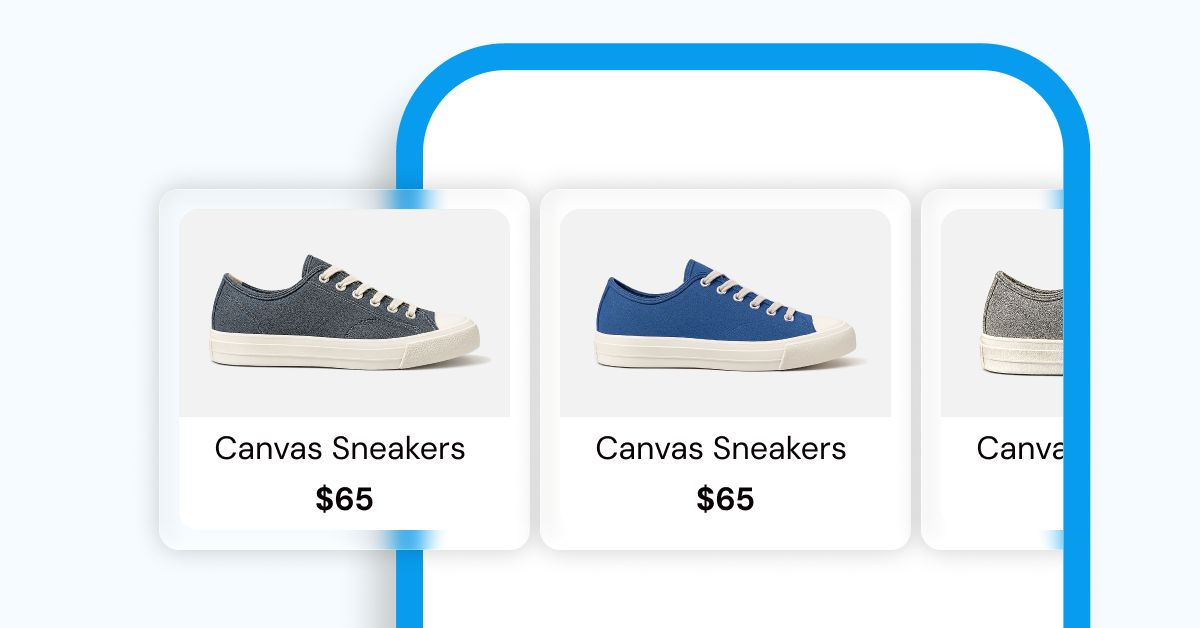
Clickable image cards
Carousels
Large files
(goodbye, 160 character limit!)
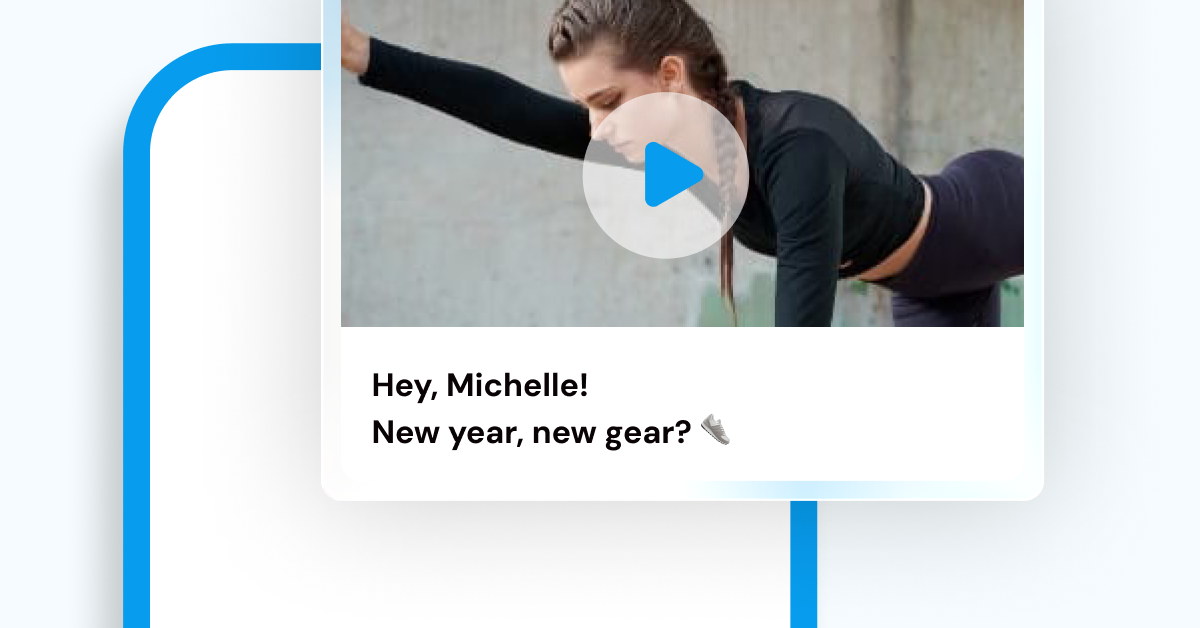
Videos
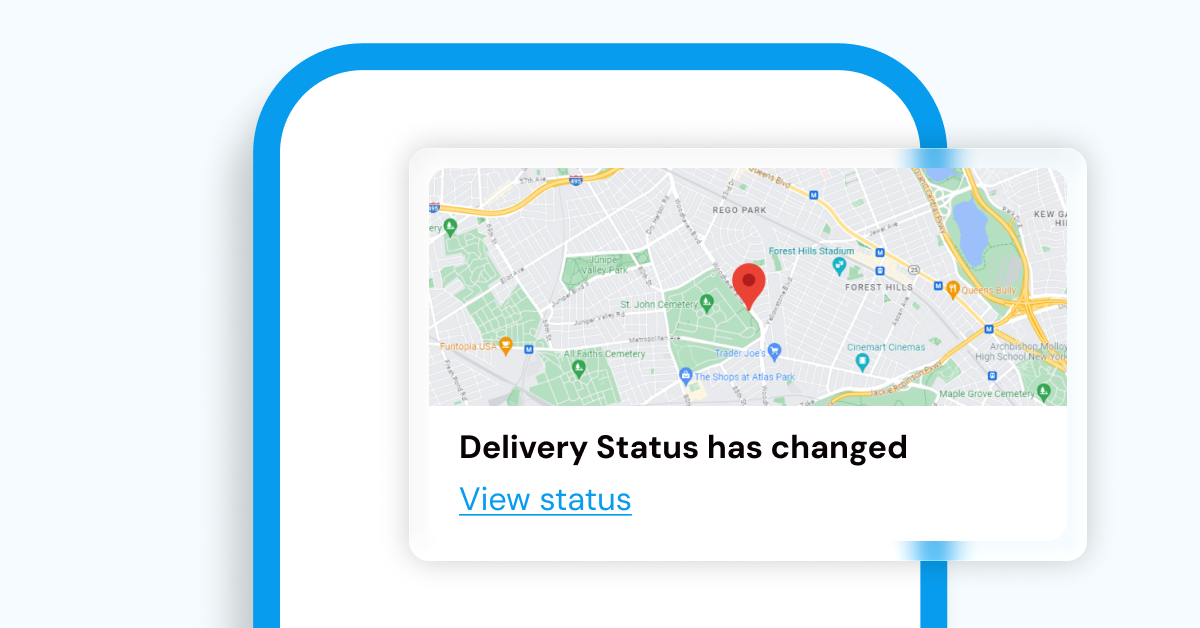
In-message maps
In-message hyperlinks
(instead of ugly or shortened URLs, like SMS allows)
Two-way communication
RCS encourages conversation by making it easier for recipients to respond. These rich media features are designed to create user-driven engagement and feedback in real time, without the friction of moving to a user-installed application.
Out There Media’s Netflix use case
Out There Media is a worldwide leader in RCS message delivery, collaborating with brands such as Porsche, McDonald’s, and Unilever to execute RCS campaigns that achieve exceptional ROI on a global scale.
In this use case example, we’re looking at the example of the kind of rich, engaging conversation OTM helped their customer Netflix create.
With RCS, Netflix can send subscribers rich cards with movie and show images, titles, descriptions, and even videos.
See below how Netflix can give an experience like no other through Out There Media’s demo. Get the popcorn ready.
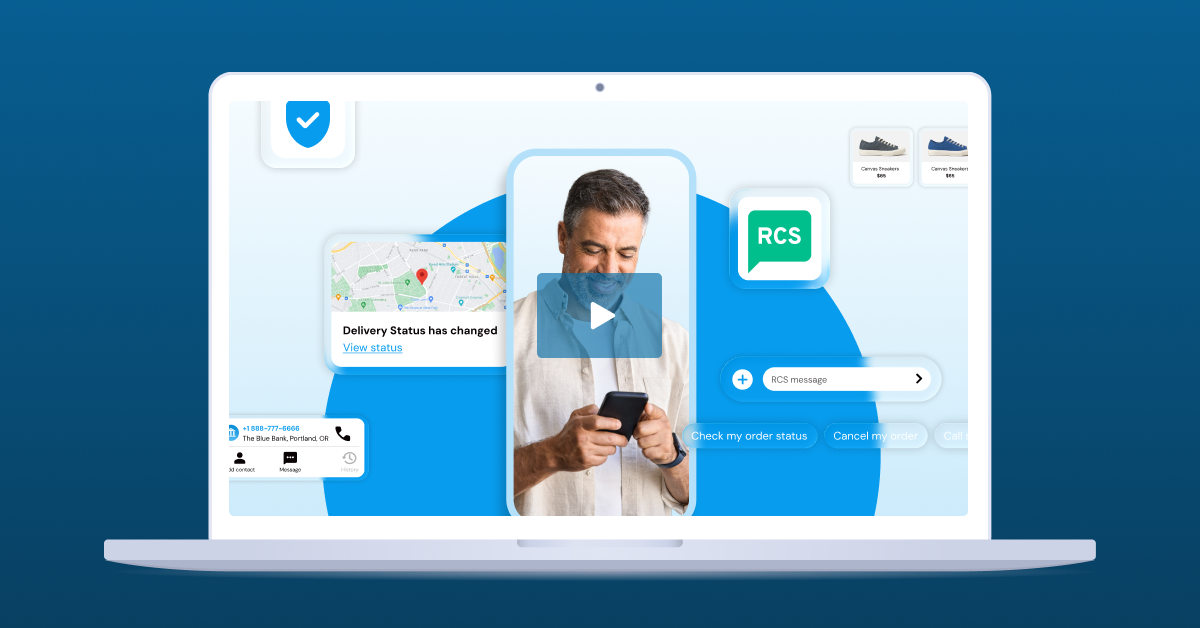
Watch the full live Netflix demo with Out There Media:
Explore the rich range of possibilities
There are truly too many potential RCS use cases to mention them all in one guide. But here are a few of our favorites: the ones where we see the potential for senders to get the biggest bang for their buck.
Forget stale emails and annoying calls. Reach out to qualified leads with rich messages tailored to their interests. From useful infographics, to easy suggested replies, RCS makes sales less painful. In some markets, RCS even allows for pdf attachments, right in the messaging app!
Maps, calendar integrations, and reminders make RCS the perfect channel for brick and mortar businesses to thrive. Whether it’s a landscaping company sending seasonal planting inspiration carousels, a gutter cleaning company sending seasonal scheduling reminders, or a bakery letting you reserve your King Cake, RCS is the perfect channel for brick and mortar.
The pioneer in SMS and MMS marketing, ecommerce stands to win big with RCS thanks to its rich media features and analytic data. Now, online stores can give you more than a snapshot with full videos, suggested replies that help shoppers find what they really want, and web views for integrated browsing and buying.
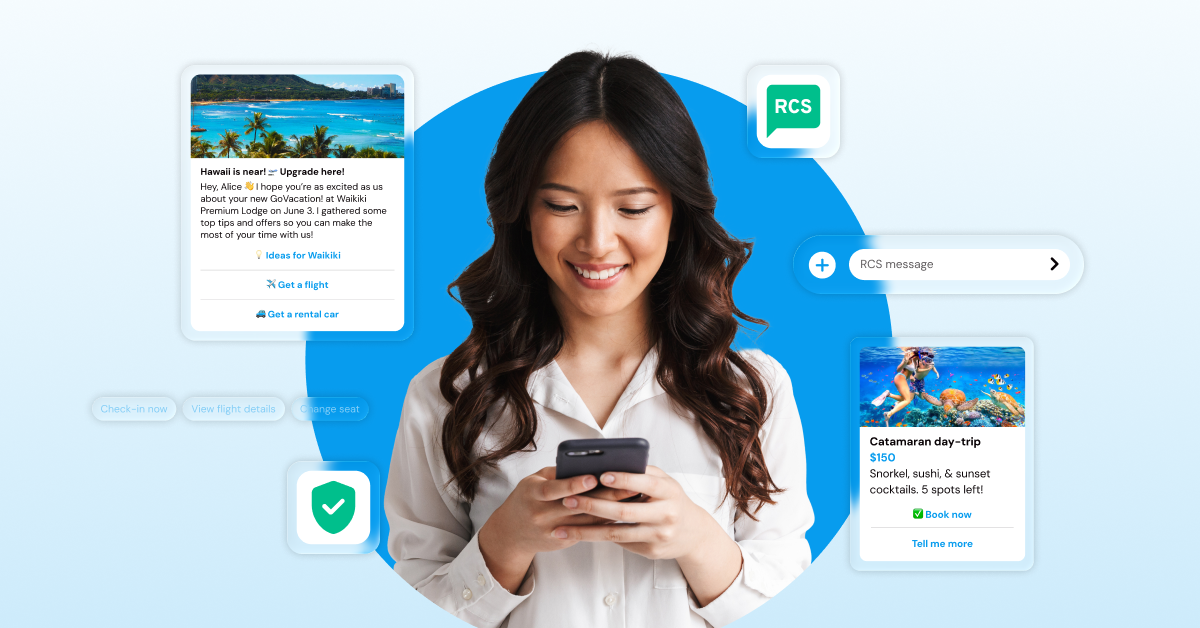
It’s one thing to get an SMS text with a promo for booking a resort stay. It’s another thing to get a full carousel of room options, with a video tour of the ones that interest you most. Once you hear the palms swaying, you’re only a click-away from booking that getaway. Not to mention arrival reminders, and all the other rich features travel and hospitality brands can use!
Say goodbye to generic messages. RCS’s read receipts and click-through data help you further target your messages so you’re hitting the right audience with the right message, at the right time. From the recipient’s perspective, it feels anything but automatic. And from the platform’s side, it’s the easiest segmentation around.
Don’t sleep on the data
It’s thrilling to imagine the transformational nature of RCS use cases. The visual nature of them. The engagement. The responses… And that’s all fine and good. But how do you turn that customer experience into hard and fast best practices? Well, it turns out that RCS offers the best analytic insights of any messaging channel currently available.
True visibility into user behavior
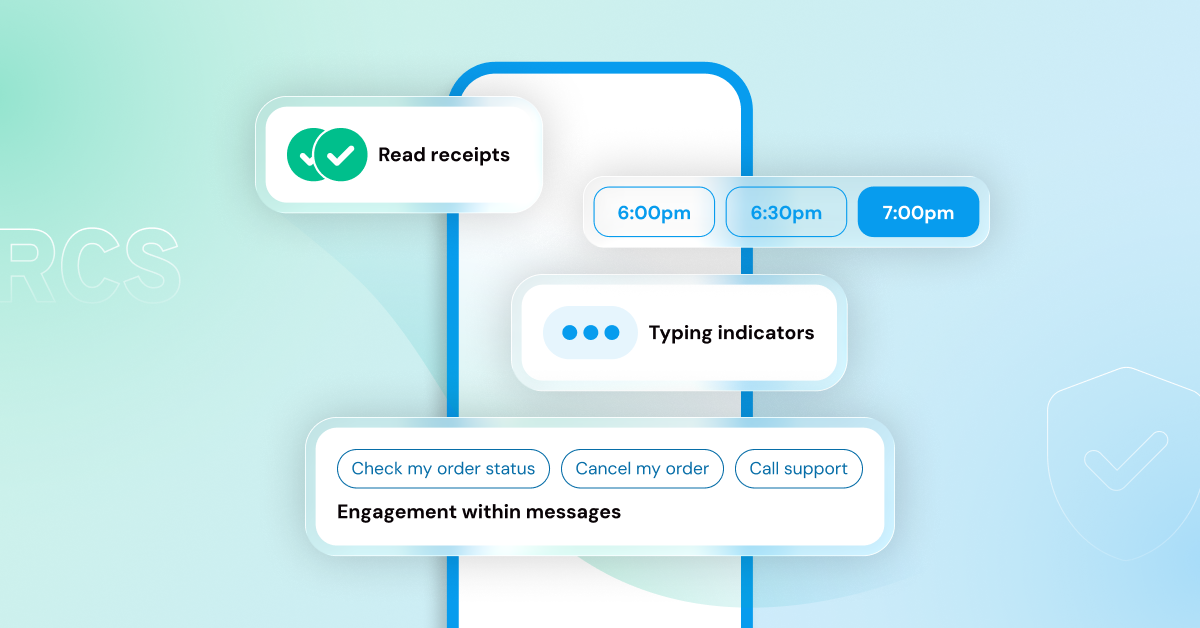
Instead of just relying on delivery receipts, RCS senders can get:
Read receipts
Typing indicators
Click through rates
Engagement/actions taken within messages.
This level of visibility is not only more extensive than what brands get with SMS, but it’s also more reliable and extensive than reported email analytics.
This level of detail lets senders evaluate and revise their strategies to best serve up messages that meet customer expectations, leading to better ROI.
The trust factor of RCS
43.3% of US consumers report receiving RCS messages from businesses, and of those respondents, 98% say they have more trust in RCS messages than traditional SMS messages.
Trust opens opportunity for notifications
It’s quite astounding that 98% of consumers who get RCS business messages trust them more than SMS.
Verified sending Rather than coming from unknown phone numbers, RCS messages arrive in your inbox labeled with the brand’s registered name.
Verified sending has been a long-awaited feature in the messaging world, with senders from global banks to county school systems looking for a way to prove they are who they say they are when a secure or time-sensitive text message comes through.
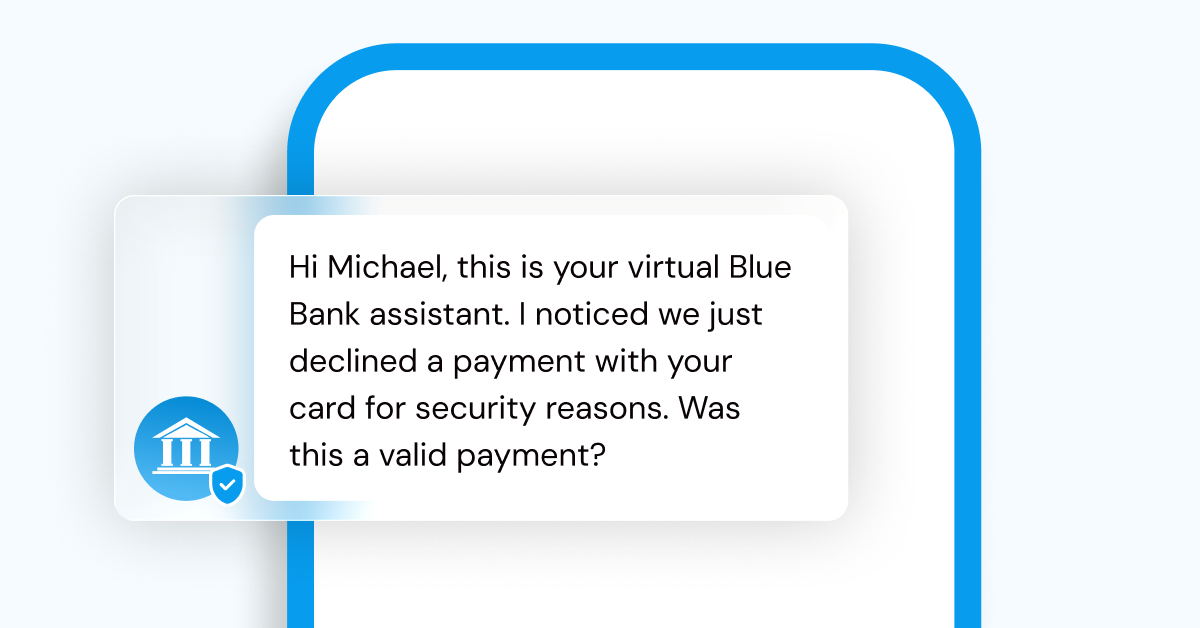
While the rich features of RCS for Business engage end users in incredible new ways with rich media capabilities—we risk burying the lede. Before a rich message is ever sent, verified branding creates immediate value for brands sending simple, but time sensitive, text messages. Imagine the confidence in receiving the following notifications from a verified brand with a blue checkmark:
The message may not change, but a blue check mark can change everything.
Creating a truly trustworthy ecosystem
A verified brand is exactly what it sounds like – it’s been verified! And to foster all the trust a blue check mark signifies, carriers have designed a verification process that is as airtight as possible. That means that brands should expect some upfront time investment as they work to rigorously validate their brand with carriers. And while a tighter vetting process isn’t a guarantee of clean traffic, verified sending is a big step in the right direction. RCS vetting most closely aligns to that of short codes, which today models a robust and highly trusted vetting process for brands.
And no matter how vetted a brand is, as with other messaging channels, RCS brands will still have to be mindful of violating carrier rules with SHAFT content, campaign drift, or even failing to secure opt-ins and respect opt-outs, even as we venture into the highly vetted RCS for Business space. That’s why carriers like T-Mobile have already shared monetary fine lists for brands that fall out of line, just as they do for SMS. Nobody likes a fine, but these measures help keep our messaging ecosystem healthy, and increase consumer trust.
The combination of rigorous upfront vetting and ongoing accountability means brands that commit to excellence will have access to a premium, trusted channel. For platforms and brands alike, this creates an opportunity to demonstrate genuine commitment to user experience and compliance best practices.
The result? A cleaner, more meaningful messaging environment that benefits everyone: brands get better engagement, and consumers get communications they trust.
Looking ahead
Market growth trajectory
Just how big will the global RCS for Business market get? Mobilesquared predicts it’ll be $12.2 billion by 2029. And that aligns with our own survey findings. When we asked about platforms’ top priority for investment and development (yes, it even outranked AI initiatives).
All signs point toward huge upcoming growth for RCS, and while the US market may be climbing up the adoption curve for some time, RCS for Business represents a big opportunity for the future of A2P messaging.
When RCS is brought into omnichannel customer communication conversations, the promise looks even brighter. A channel strategy that brings together AI voice and rich messaging has the potential to serve up exactly what customers need, perhaps before they even realize they need it. And companies that carefully construct a voice and messaging mix stand to benefit the most over time.
Challenges to adoption
Price has been a consideration for all forms of business text messaging, beginning with short codes back in the ‘aughts. Compared to email, messaging is comparatively more expensive. Likewise, MMS messages are more expensive than single, plain-text SMS messages.
But when compared to channels across the marketing spectrum, including direct mail, digital display ads, etc., RCS suddenly becomes an affordable-looking option. Certainly, the trust of verified branding alone may be enough for some large enterprises, government and non-profit organizations, and healthcare providers, to opt for the upgrade.
The US carrier situation
As of this writing, it’s still early days for US carrier adoption of RCS. But as demand amps up, we have no doubt we’ll see carriers respond with new solutions, or the introduction of third-party vetting, as we see in other business messaging channels, like 10DLC and Short Codes.
Plan your first campaign: the RCS readiness checklist
We’ve talked through the RCS for Business landscape, but now it’s time to start planning. Early adopters are already realizing the ROI potential of RCS, so this is the time to act. Walk through this checklist to see which brands are the best fit for RCS early adoption.
What the industry is looking for at this stage of market growth:
Preferred use cases
Marketing and Ecommerce use cases are being favored for early adopters
Political use cases are not a good fit for RCS at this stage
Feature usage
Carriers are eager to see brands that leverage the rich features of RCS (vs. simply being basic text messages sent via the RCS channel)
Sending volume
Brands should be ready for launch and preparing to send at consistent volumes.
Brand recognition
Recognizable brands are ideal. This doesn’t mean a brand needs to be a household name, or on the Fortune 500, but it should be well-known and recognizable.
Assessing the ROI for brands:
Verified sending
Determine if verified sending will be a big value for the brand (simply confirming a user’s already-scheduled appointment may not benefit as much from verified sending, as an alert from a financial institution)
Feature usage
Determine if rich features are going to be useful for the brand: tools like map and calendar integrations, suggested replies, rich media cards, etc.
Price
Assess price sensitivity. At this point, RCS can be considered a premium channel.
Take the next step toward RCS revenue
Experiment with rich media features in our message builder tool